The 100 Best Lifehacks of 2010: The Year in Review

Happy New Year everyone! It’s the first week of 2011 and many of us are getting ready to kick off the brand new year with a big bang. As we start off 2011 with our new resolutions and goals, let us now look back at the best posts at Lifehack in the past year.

In this review post, I have gathered 100 of the best LifeHack articles in 2010. These articles have been selected based on your votes and how much YOU have talked about them in social media (Facebook and Twitter). I have categorized these 100 articles into 11 main categories of Overall Personal Growth, Maximizing Productivity & GTD, Lifestyle & Habits, Inspiration & Motivation, Goal Achievement & Success, Emotional Mastery, People Skills & Relationships, Communications & Writing, Business & Career, Creativity & Inspiration, Family and Miscellaneous.

Do not attempt to read this whole post at once! Instead, bookmark this mega list post and come back time and again to read the articles relevant to you at that point in time. I’ve ranked the posts within each category in order of popularity, with the most popular post being #1. I’ve also included the (1) author name and (2) total number of retweets and Facebook likes/shares beside the article, so you can gauge how well-received the article was among the LifeHack readers.

Let me start off with the top 10 most popular life hack posts out of the 100s of posts published in 2010. Each of them is a gem in itself. Be sure to check each of them out!

Following which, I’ll present the 100 top articles presented in the 11 catetgories. Enjoy! And remember to share this to others via the retweet and Facebook buttons above! 🙂

Top 10 Most Popular Posts in 2010:

  1. 42 Practical Ways To Improve Yourself (by Celestine Chua, 2176)
  2. Kitchen Hack: One-Minute Bread (by Seth Simonds, 2126)
  3. The Not-Do List: 9 Things You Need To Stop Doing (by Celestine Chua, 940)
  4. Newbie Fashion Tips for Grown-Up Men (by Dustin Wax, 924)
  5. 7 Things you should stop doing at work (by Seth Simonds, 845)
  6. 11 Practical Ways To Stop Procrastination (by Celestine Chua, 823)
  7. 63 Ways to Build Self-Confidence (by Steve Errey, 754)
  8. 13 Strategies To Jumpstart Your Productivity (by Celestine Chua, 700)
  9. Twitter Hack: 5 Ways To Up Your Visible IQ (by Seth Simonds, 505)
  10. 20 Quick Tips For Better Time Management (by Celestine Chua, 497)

Overall Personal Growth

  1. 42 Practical Ways To Improve Yourself (by Celestine Chua, 2176)
  2. Why Being A Perfectionist May Not Be So Perfect (by Celestine Chua, 367)
  3. The Quickest Way to Create a New Mindset (by Craig Harper, 263)
  4. The Law of Attraction is a Dangerous Delusion (by Paul Sloane, 249)
  5. 7 Ways to Make Life Changing Decisions (by Hulbert Lee, 236)
  6. 5 Steps To Move Out Of Stagnancy In Life (by Celestine Chua, 150)
  7. What Do You Need To Let Go Of? (by Craig Harper, 132)
  8. How To Save Thousands on Personal Development (by Craig Harper, 114)
  9. Can You Transform Without Getting Uncomfortable? (by Craig Harper, 99)
  10. Do Your Beliefs Empower You or Limit You? (by Craig Harper, 97)
  11. 9 Ways To Tell If You Are A Self-Help Junkie (And What To Do About It) (by Celestine Chua, 90)

Maximizing Productivity and GTD

  1. The Not-Do List: 9 Things You Need To Stop Doing (by Celestine Chua, 940)
  2. 11 Practical Ways To Stop Procrastination (by Celestine Chua, 823)
  3. 13 Strategies To Jumpstart Your Productivity (by Celestine Chua, 700)
  4. Twitter Hack: 5 Ways To Up Your Visible IQ (by Seth Simonds, 505)
  5. 20 Quick Tips For Better Time Management (by Celestine Chua, 497)
  6. How To Tweet in Just 5 Minutes a Week (by Seth Simonds, 229)
  7. A New Productivity for the Smartphone Era (by Francis Wade, 222)
  8. 5 Types of Emails You Should be Automatically Filtering (by Sid Sivara, 170)
  9. 12 Useful Ways To Get Out Of Ruts (by Celestine Chua, 164)
  10. Are You Becoming a “Productive” Moron? (by Francis Wade, 163)
  11. Staying Organized: 8 Tips for Daily Sanity (by Debbie Bowie, 160)
  12. Productivity Pr0n: 5 Unusually Useful Notepads (by Dustin Wax, 151)
  13. How I’m Getting a Smartphone, While Avoiding Crazy Habits (by Francis Wade, 144)
  14. 7 Ways To Stay Grounded by Staying Organized (by Debbie Bowie, 127)
  15. Fight Bad Cellphone Habits For Better Time Management (by Francis Wade, 124)
  16. Are You a Productive Person? Look at the Number of People Waiting (by Francis Wade, 121)

Lifestyle and Habits

  1. 7 Caffeine-Free Ways to Increase Alertness (by Seth Simonds, 369)
  2. 6 Steps To Remove TV From Your Life (by Celestine Chua, 357)
  3. 5 Tips For Becoming An Early Riser (by Seth Simonds, 290)
  4. Do You Have A Morning Ritual? (by Seth Simonds, 279)
  5. 7 Effective Ways To De-Junk Your Life (by Seth Simonds, 254)
  6. 6 Proven Ways To Make New Habits Stick(by Celestine Chua, 242)
  7. 9 Tips For Better Sleep (by Seth Simonds, 213)
  8. Sleep Hack: A Simple Strategy For Better Rest In Less Time (by Seth Simonds, 187)

Inspiration & Motivation

  1. 5 Simple ways to live a life you love (by Seth Simonds, 692)
  2. 20 Inspirational Quotes To Brighten Your Day (by Celestine Chua, 573)
  3. 7 Ways To Demonstrate True Strength (by Seth Simonds, 407)
  4. 8 Life Lessons You Should Learn Today (by Mike Brown, 275)
  5. What Advice Would You Give To Your 18 Year Old Self? (by Seth Simonds, 157)

Goal Achievement & Success

  1. 11 Reasons Why You Aren’t Getting Results (by Celestine Chua, 368)
  2. 11 Simple Ways To Avoid Burnout (by Seth Simonds, 348)
  3. Brilliant Thinkers Relish Ambiguity (by Paul Sloane, 340)
  4. Top 10 Resolutions To Set For The New Year (by Celestine Chua, 304)
  5. How To Be In The Right Place At The Right Time More Often (by Seth Simonds, 239)
  6. How To Start and Run a Mastermind Group (by Sid Sivara, 208)
  7. 10 Tips to Create a High Performance Environment (by Debbie Bowie, 161)
  8. Change Your Focus For Better Results (by Craig Harper, 155)
  9. How To Walk On Water (by Seth Simonds, 130)
  10. How to Do What You’ve Always Wanted (by Steve Errey, 130)
  11. Education Should be More than Academic Basics (by Craig Harper, 115)

Emotional Mastery

  1. 63 Ways to Build Self-Confidence (by Steve Errey, 754)
  2. 7 Simple Ways To Be Happier (by Seth Simonds, 509)
  3. 7 Quick ways to turn a bad day around (by Seth Simonds, 449)
  4. 11 Reasons to be Cheerful (by Paul Sloane, 430)
  5. 5 Simple Ways To Spread Positivity (by Seth Simonds, 272)
  6. How Much Stuff Do You Need To Feel Happy? (by Seth Simonds, 254)
  7. 5 Ways to Stop Second Guessing Yourself (by Steve Errey, 169)
  8. 5 Ways to Brighten A Cloudy Day (by Seth Simonds, 110)

People Skills & Relationships

  1. 9 Helpful Tips To Deal With Negative People (by Celestine, 760)
  2. 9 Ways To Manage People Who Bother You (by Celestine Chua, 554)
  3. 5 Simple Ways To Be A Better Listener (by Seth Simonds, 357)
  4. Top 10 Ways to Lead More Effectively with Humor (by Mike Brown, 236)
  5. 5 Steps To Conquer Any Networking Event (by Seth Simonds, 183)
  6. 5 Keys To A Better Love Life (by Seth Simonds, 178)
  7. 5 Keys to Building Networks Over Time (by Alexandra Levit, 122)

Communications & Writing

  1. 11 Paradoxes of Being a Better Public Speaker (by Mike Brown, 326)
  2. 9 Expert Tips For Better Writing (by Seth Simonds, 240)
  3. 10 Ways Blogging Can Improve Your Life (by Annabel Candy, 232)
  4. 9 Ways To Handle Interruptions Like A Pro (by Seth Simonds, 211)
  5. 8 Qualities of Powerful Writing (by Dustin Wax, 182)
  6. 31 Proven Ways To Get More Comments On Your Blog (by Seth Simonds, 167)
  7. Develop Your Greatest Skill – Language (by Paul Sloane, 106)
  8. How to Tell a Funny Joke (by Hulbert Lee, 96)

Business & Career

  1. 7 Things you should stop doing at work (by Seth Simonds, 845)
  2. 8 Ways To Bring Your Creative Passions to Work (by Mike Brown, 238)
  3. 9 Strategies to Make Selling Your Ideas More Successful (by Mike Brown, 192)
  4. How to Be Successful When You Can’t Plan Ahead (by Mike Brown, 190)
  5. Wise Money – 5 Tips From Billionaire Investor Warren Buffett (by Seth Simonds, 171)
  6. 5 Things You Should Know About Personal Finance (by Ibrahim Husain, 137)
  7. 8 Ways to Recharge a Tired Old Job (by Mike Brown, 121)
  8. How to Shine in a Job Interview (by Steve Errey, 110)
  9. It’s Time to Manage Your Online Personal Brand (by Dan Schawbel, 107)

Creativity & Inspiration

  1. 9 Great Ways to Be Exceptionally Boring (by Paul Sloane, 387)
  2. How to Feel Inspired When You’ve Lost Motivation (by Hulbert Lee, 308)
  3. 12 Tips for Being Good Feng Shui (by Debbie Bowie, 256)
  4. Stop Trying To Be Creative (by Seth Simonds, 182)
  5. How to Kill a Radical Idea (by Paul Sloane, 132)

Family

  1. The Secret to Helping Your Child Excel in School and in Life (by Erin Kurt, 183)
  2. 11 Way to Instill a Love of Reading in Your Child (by Erin Kurt, 182)
  3. Parenting: 6 Myths You Should Know About (by Erin Kurt, 165)
  4. 8 Reasons Why Children Misbehave (With Solutions!) (by Erin Kurt, 158)
  5. How “Fun” Can Be Your Best Discipline Technique(by Erin Kurt, 119)
  6. 4 Ways to Spend Time with Your Kids When You Have No Time (by Erin Kurt, 115)

Miscellaneous

  1. Kitchen Hack: One-Minute Bread (by Seth Simonds, 2126)
  2. Newbie Fashion Tips for Grown-Up Men (by Dustin Wax, 924)
  3. 11 Sinfully Easy Sangria Recipes (by Seth Simonds, 257)
  4. Kitchen Hack: 7-Minute Chocolate Covered Strawberries (by Sarah Joy Albrecht, 112)
  5. 4 Tips for Getting Started and Self-Publishing a Book (by Debbie Bowie, 100)

Last but not least, here’s a special thank you to Leon Ho (founder of Lifehack.org) and all the writers at Lifehack who have contributed the articles above and more. LifeHack would not be where it is today without all of you. Thank you so much everyone! 🙂


Posted in Social | Leave a comment

No Frills Personal Development

No Frills Personal Development

It’s become apparent that not everyone connects with, relates to or gains value from the traditional personal development language or paradigm. Or words like paradigm (for that matter). Many of my readers have shared with me that their partner (sister, brother, mother, father, boss) needs to hear these (types of) messages but they seem to have an aversion to anything that smells like ‘motivational speaker’. To be honest, I don’t blame them. Some motivational speakers are a little smelly.

So, here it is team: my no frills, twelve-step, personal development philosophy for people who hate self-help stuff and cheesy motivational types. In order to avoid boredom, confusion and distraction, I’ve kept it simple and succinct.

Step 1. Don’t talk big. Big-talkers are notorious under do-ers, under-achievers and under-performers. They’re also pains in the arse.

Step 2. Don’t wait for things to ‘work out’. Idiots wait for things to work out. Rather than hoping things will happen, make them happen.

Step 3. Lose the bad attitude. Attitude is a choice. Better attitude equals better decisions, behaviours and outcomes.

Step 4. Don’t eat crap. Being unhealthy on a physical level means you won’t function optimally on any level: mentally, emotionally, professionally or socially. Eat crap and you’ll look, feel and function like crap!

Step 5. Actually care about others. Being a self-centered idiot ain’t a recipe for success.

Step 6. Don’t make life harder than it needs to be. Life’s challenging enough without you complicating the simple. Suck it up, Princess.

Step 7. Do things early in the day. Being productive early puts you in a better place (mentally, emotionally and creatively) for the rest of the day.

Step 8. Let go of your ill-conceived beliefs. It’s time to lose those self-limiting, disempowering beliefs. They’ve run your life for long enough. You’re good enough, talented enough and, yes, you deserve happiness.

Step 9. Bad things happen and life’s not fair – deal with it. More often than not success or failure will be determined by the way you react to the situations, circumstances and events (good and bad, foreseen or not) of your world. Better reactions equal better results.

Step 10. Don’t focus on (or obsess about) things you can’t change. Wasting your time, talent and emotional energy on things that are beyond your control is a recipe for frustration, misery and stagnation. Invest your energy in the things you can control.

Step 11. Don’t avoid things you fear. Putting your head in the sand just shows the world your arse. And none of us want that. Lasting change begins with awareness and acknowledgement. Step up and do what’s necessary.

Step 12. Don’t over-think things. Analysis paralysis is a painful, pointless and unnecessary condition. To think is good. To obsess is bad. Stop obsessing.


Posted in Social | Leave a comment

The Dark Side of Dubai


Dubai was meant to be a Middle-Eastern Shangri-La, a glittering monument to Arab enterprise and western capitalism. But as hard times arrive in the city state that rose from the desert sands, an uglier story is emerging. Johann Hari reports

Tuesday, 7 April 2009
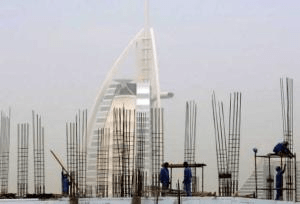


Construction workers in their distinctive blue overalls building the upper floors a new Dubai tower, with the distinctive Burj al-Arab hotel in the background
Click here for more Dubai images

The wide, smiling face of Sheikh Mohammed – the absolute ruler of Dubai – beams down on his creation. His image is displayed on every other building, sandwiched between the more familiar corporate rictuses of Ronald McDonald and Colonel Sanders. This man has sold Dubai to the world as the city of One Thousand and One Arabian Lights, a Shangri-La in the Middle East insulated from the dust-storms blasting across the region. He dominates the Manhattan-manqué skyline, beaming out from row after row of glass pyramids and hotels smelted into the shape of piles of golden coins. And there he stands on the tallest building in the world – a skinny spike, jabbing farther into the sky than any other human construction in history.

But something has flickered in Sheikh Mohammed’s smile. The ubiquitous cranes have paused on the skyline, as if stuck in time. There are countless buildings half-finished, seemingly abandoned. In the swankiest new constructions – like the vast Atlantis hotel, a giant pink castle built in 1,000 days for $1.5bn on its own artificial island – where rainwater is leaking from the ceilings and the tiles are falling off the roof. This Neverland was built on the Never-Never – and now the cracks are beginning to show. Suddenly it looks less like Manhattan in the sun than Iceland in the desert.

Once the manic burst of building has stopped and the whirlwind has slowed, the secrets of Dubai are slowly seeping out. This is a city built from nothing in just a few wild decades on credit and ecocide, suppression and slavery. Dubai is a living metal metaphor for the neo-liberal globalised world that may be crashing – at last – into history.
Related articles
The Desert Blogger: Jamie Stewart’s dispatches from Dubai

I. An Adult Disneyland

Karen Andrews can’t speak. Every time she starts to tell her story, she puts her head down and crumples. She is slim and angular and has the faded radiance of the once-rich, even though her clothes are as creased as her forehead. I find her in the car park of one of Dubai’s finest international hotels, where she is living, in her Range Rover. She has been sleeping here for months, thanks to the kindness of the Bangladeshi car park attendants who don’t have the heart to move her on. This is not where she thought her Dubai dream would end.

Her story comes out in stutters, over four hours. At times, her old voice – witty and warm – breaks through. Karen came here from Canada when her husband was offered a job in the senior division of a famous multinational. "When he said Dubai, I said – if you want me to wear black and quit booze, baby, you’ve got the wrong girl. But he asked me to give it a chance. And I loved him."

All her worries melted when she touched down in Dubai in 2005. "It was an adult Disneyland, where Sheikh Mohammed is the mouse," she says. "Life was fantastic. You had these amazing big apartments, you had a whole army of your own staff, you pay no taxes at all. It seemed like everyone was a CEO. We were partying the whole time."

Her husband, Daniel, bought two properties. "We were drunk on Dubai," she says. But for the first time in his life, he was beginning to mismanage their finances. "We’re not talking huge sums, but he was getting confused. It was so unlike Daniel, I was surprised. We got into a little bit of debt." After a year, she found out why: Daniel was diagnosed with a brain tumour.

One doctor told him he had a year to live; another said it was benign and he’d be okay. But the debts were growing. "Before I came here, I didn’t know anything about Dubai law. I assumed if all these big companies come here, it must be pretty like Canada’s or any other liberal democracy’s," she says. Nobody told her there is no concept of bankruptcy. If you get into debt and you can’t pay, you go to prison.

"When we realised that, I sat Daniel down and told him: listen, we need to get out of here. He knew he was guaranteed a pay-off when he resigned, so we said – right, let’s take the pay-off, clear the debt, and go." So Daniel resigned – but he was given a lower pay-off than his contract suggested. The debt remained. As soon as you quit your job in Dubai, your employer has to inform your bank. If you have any outstanding debts that aren’t covered by your savings, then all your accounts are frozen, and you are forbidden to leave the country.

"Suddenly our cards stopped working. We had nothing. We were thrown out of our apartment." Karen can’t speak about what happened next for a long time; she is shaking.

Daniel was arrested and taken away on the day of their eviction. It was six days before she could talk to him. "He told me he was put in a cell with another debtor, a Sri Lankan guy who was only 27, who said he couldn’t face the shame to his family. Daniel woke up and the boy had swallowed razor-blades. He banged for help, but nobody came, and the boy died in front of him."

Karen managed to beg from her friends for a few weeks, "but it was so humiliating. I’ve never lived like this. I worked in the fashion industry. I had my own shops. I’ve never…" She peters out.

Daniel was sentenced to six months’ imprisonment at a trial he couldn’t understand. It was in Arabic, and there was no translation. "Now I’m here illegally, too," Karen says I’ve got no money, nothing. I have to last nine months until he’s out, somehow." Looking away, almost paralysed with embarrassment, she asks if I could buy her a meal.

She is not alone. All over the city, there are maxed-out expats sleeping secretly in the sand-dunes or the airport or in their cars.

"The thing you have to understand about Dubai is – nothing is what it seems," Karen says at last. "Nothing. This isn’t a city, it’s a con-job. They lure you in telling you it’s one thing – a modern kind of place – but beneath the surface it’s a medieval dictatorship."

II. Tumbleweed

Thirty years ago, almost all of contemporary Dubai was desert, inhabited only by cactuses and tumbleweed and scorpions. But downtown there are traces of the town that once was, buried amidst the metal and glass. In the dusty fort of the Dubai Museum, a sanitised version of this story is told.

In the mid-18th century, a small village was built here, in the lower Persian Gulf, where people would dive for pearls off the coast. It soon began to accumulate a cosmopolitan population washing up from Persia, the Indian subcontinent, and other Arab countries, all hoping to make their fortune. They named it after a local locust, the daba, who consumed everything before it. The town was soon seized by the gunships of the British Empire, who held it by the throat as late as 1971. As they scuttled away, Dubai decided to ally with the six surrounding states and make up the United Arab Emirates (UAE).

The British quit, exhausted, just as oil was being discovered, and the sheikhs who suddenly found themselves in charge faced a remarkable dilemma. They were largely illiterate nomads who spent their lives driving camels through the desert – yet now they had a vast pot of gold. What should they do with it?

Dubai only had a dribble of oil compared to neighbouring Abu Dhabi – so Sheikh Maktoum decided to use the revenues to build something that would last. Israel used to boast it made the desert bloom; Sheikh Maktoum resolved to make the desert boom. He would build a city to be a centre of tourism and financial services, sucking up cash and talent from across the globe. He invited the world to come tax-free – and they came in their millions, swamping the local population, who now make up just 5 per cent of Dubai. A city seemed to fall from the sky in just three decades, whole and complete and swelling. They fast-forwarded from the 18th century to the 21st in a single generation.

If you take the Big Bus Tour of Dubai – the passport to a pre-processed experience of every major city on earth – you are fed the propaganda-vision of how this happened. "Dubai’s motto is ‘Open doors, open minds’," the tour guide tells you in clipped tones, before depositing you at the souks to buy camel tea-cosies. "Here you are free. To purchase fabrics," he adds. As you pass each new monumental building, he tells you: "The World Trade Centre was built by His Highness…"

But this is a lie. The sheikh did not build this city. It was built by slaves. They are building it now.

III. Hidden in plain view

There are three different Dubais, all swirling around each other. There are the expats, like Karen; there are the Emiratis, headed by Sheikh Mohammed; and then there is the foreign underclass who built the city, and are trapped here. They are hidden in plain view. You see them everywhere, in dirt-caked blue uniforms, being shouted at by their superiors, like a chain gang – but you are trained not to look. It is like a mantra: the Sheikh built the city. The Sheikh built the city. Workers? What workers?

Every evening, the hundreds of thousands of young men who build Dubai are bussed from their sites to a vast concrete wasteland an hour out of town, where they are quarantined away. Until a few years ago they were shuttled back and forth on cattle trucks, but the expats complained this was unsightly, so now they are shunted on small metal buses that function like greenhouses in the desert heat. They sweat like sponges being slowly wrung out.

Sonapur is a rubble-strewn patchwork of miles and miles of identical concrete buildings. Some 300,000 men live piled up here, in a place whose name in Hindi means "City of Gold". In the first camp I stop at – riven with the smell of sewage and sweat – the men huddle around, eager to tell someone, anyone, what is happening to them.

Sahinal Monir, a slim 24-year-old from the deltas of Bangladesh. "To get you here, they tell you Dubai is heaven. Then you get here and realise it is hell," he says. Four years ago, an employment agent arrived in Sahinal’s village in Southern Bangladesh. He told the men of the village that there was a place where they could earn 40,000 takka a month (£400) just for working nine-to-five on construction projects. It was a place where they would be given great accommodation, great food, and treated well. All they had to do was pay an up-front fee of 220,000 takka (£2,300) for the work visa – a fee they’d pay off in the first six months, easy. So Sahinal sold his family land, and took out a loan from the local lender, to head to this paradise.

As soon as he arrived at Dubai airport, his passport was taken from him by his construction company. He has not seen it since. He was told brusquely that from now on he would be working 14-hour days in the desert heat – where western tourists are advised not to stay outside for even five minutes in summer, when it hits 55 degrees – for 500 dirhams a month (£90), less than a quarter of the wage he was promised. If you don’t like it, the company told him, go home. "But how can I go home? You have my passport, and I have no money for the ticket," he said. "Well, then you’d better get to work," they replied.

Sahinal was in a panic. His family back home – his son, daughter, wife and parents – were waiting for money, excited that their boy had finally made it. But he was going to have to work for more than two years just to pay for the cost of getting here – and all to earn less than he did in Bangladesh.

He shows me his room. It is a tiny, poky, concrete cell with triple-decker bunk-beds, where he lives with 11 other men. All his belongings are piled onto his bunk: three shirts, a spare pair of trousers, and a cellphone. The room stinks, because the lavatories in the corner of the camp – holes in the ground – are backed up with excrement and clouds of black flies. There is no air conditioning or fans, so the heat is "unbearable. You cannot sleep. All you do is sweat and scratch all night." At the height of summer, people sleep on the floor, on the roof, anywhere where they can pray for a moment of breeze.

The water delivered to the camp in huge white containers isn’t properly desalinated: it tastes of salt. "It makes us sick, but we have nothing else to drink," he says.

The work is "the worst in the world," he says. "You have to carry 50kg bricks and blocks of cement in the worst heat imaginable … This heat – it is like nothing else. You sweat so much you can’t pee, not for days or weeks. It’s like all the liquid comes out through your skin and you stink. You become dizzy and sick but you aren’t allowed to stop, except for an hour in the afternoon. You know if you drop anything or slip, you could die. If you take time off sick, your wages are docked, and you are trapped here even longer."

He is currently working on the 67th floor of a shiny new tower, where he builds upwards, into the sky, into the heat. He doesn’t know its name. In his four years here, he has never seen the Dubai of tourist-fame, except as he constructs it floor-by-floor.

Is he angry? He is quiet for a long time. "Here, nobody shows their anger. You can’t. You get put in jail for a long time, then deported." Last year, some workers went on strike after they were not given their wages for four months. The Dubai police surrounded their camps with razor-wire and water-cannons and blasted them out and back to work.

The "ringleaders" were imprisoned. I try a different question: does Sohinal regret coming? All the men look down, awkwardly. "How can we think about that? We are trapped. If we start to think about regrets…" He lets the sentence trail off. Eventually, another worker breaks the silence by adding: "I miss my country, my family and my land. We can grow food in Bangladesh. Here, nothing grows. Just oil and buildings."

Since the recession hit, they say, the electricity has been cut off in dozens of the camps, and the men have not been paid for months. Their companies have disappeared with their passports and their pay. "We have been robbed of everything. Even if somehow we get back to Bangladesh, the loan sharks will demand we repay our loans immediately, and when we can’t, we’ll be sent to prison."

This is all supposed to be illegal. Employers are meant to pay on time, never take your passport, give you breaks in the heat – but I met nobody who said it happens. Not one. These men are conned into coming and trapped into staying, with the complicity of the Dubai authorities.

Sahinal could well die out here. A British man who used to work on construction projects told me: "There’s a huge number of suicides in the camps and on the construction sites, but they’re not reported. They’re described as ‘accidents’." Even then, their families aren’t free: they simply inherit the debts. A Human Rights Watch study found there is a "cover-up of the true extent" of deaths from heat exhaustion, overwork and suicide, but the Indian consulate registered 971 deaths of their nationals in 2005 alone. After this figure was leaked, the consulates were told to stop counting.

At night, in the dusk, I sit in the camp with Sohinal and his friends as they scrape together what they have left to buy a cheap bottle of spirits. They down it in one ferocious gulp. "It helps you to feel numb", Sohinal says through a stinging throat. In the distance, the glistening Dubai skyline he built stands, oblivious.

IV. Mauled by the mall

I find myself stumbling in a daze from the camps into the sprawling marble malls that seem to stand on every street in Dubai. It is so hot there is no point building pavements; people gather in these cathedrals of consumerism to bask in the air conditioning. So within a ten minute taxi-ride, I have left Sohinal and I am standing in the middle of Harvey Nichols, being shown a £20,000 taffeta dress by a bored salesgirl. "As you can see, it is cut on the bias…" she says, and I stop writing.

Time doesn’t seem to pass in the malls. Days blur with the same electric light, the same shined floors, the same brands I know from home. Here, Dubai is reduced to its component sounds: do-buy. In the most expensive malls I am almost alone, the shops empty and echoing. On the record, everybody tells me business is going fine. Off the record, they look panicky. There is a hat exhibition ahead of the Dubai races, selling elaborate headgear for £1,000 a pop. "Last year, we were packed. Now look," a hat designer tells me. She swoops her arm over a vacant space.

I approach a blonde 17-year-old Dutch girl wandering around in hotpants, oblivious to the swarms of men gaping at her. "I love it here!" she says. "The heat, the malls, the beach!" Does it ever bother you that it’s a slave society? She puts her head down, just as Sohinal did. "I try not to see," she says. Even at 17, she has learned not to look, and not to ask; that, she senses, is a transgression too far.

Between the malls, there is nothing but the connecting tissue of asphalt. Every road has at least four lanes; Dubai feels like a motorway punctuated by shopping centres. You only walk anywhere if you are suicidal. The residents of Dubai flit from mall to mall by car or taxis.

How does it feel if this is your country, filled with foreigners? Unlike the expats and the slave class, I can’t just approach the native Emiratis to ask questions when I see them wandering around – the men in cool white robes, the women in sweltering black. If you try, the women blank you, and the men look affronted, and tell you brusquely that Dubai is "fine". So I browse through the Emirati blog-scene and found some typical-sounding young Emiratis. We meet – where else? – in the mall.

Ahmed al-Atar is a handsome 23-year-old with a neat, trimmed beard, tailored white robes, and rectangular wire-glasses. He speaks perfect American-English, and quickly shows that he knows London, Los Angeles and Paris better than most westerners. Sitting back in his chair in an identikit Starbucks, he announces: "This is the best place in the world to be young! The government pays for your education up to PhD level. You get given a free house when you get married. You get free healthcare, and if it’s not good enough here, they pay for you to go abroad. You don’t even have to pay for your phone calls. Almost everyone has a maid, a nanny, and a driver. And we never pay any taxes. Don’t you wish you were Emirati?"

I try to raise potential objections to this Panglossian summary, but he leans forward and says: "Look – my grandfather woke up every day and he would have to fight to get to the well first to get water. When the wells ran dry, they had to have water delivered by camel. They were always hungry and thirsty and desperate for jobs. He limped all his life, because he there was no medical treatment available when he broke his leg. Now look at us!"

For Emiratis, this is a Santa Claus state, handing out goodies while it makes its money elsewhere: through renting out land to foreigners, soft taxes on them like business and airport charges, and the remaining dribble of oil. Most Emiratis, like Ahmed, work for the government, so they’re cushioned from the credit crunch. "I haven’t felt any effect at all, and nor have my friends," he says. "Your employment is secure. You will only be fired if you do something incredibly bad." The laws are currently being tightened, to make it even more impossible to sack an Emirati.

Sure, the flooding-in of expats can sometimes be "an eyesore", Ahmed says. "But we see the expats as the price we had to pay for this development. How else could we do it? Nobody wants to go back to the days of the desert, the days before everyone came. We went from being like an African country to having an average income per head of $120,000 a year. And we’re supposed to complain?"

He says the lack of political freedom is fine by him. "You’ll find it very hard to find an Emirati who doesn’t support Sheikh Mohammed." Because they’re scared? "No, because we really all support him. He’s a great leader. Just look!" He smiles and says: "I’m sure my life is very much like yours. We hang out, have a coffee, go to the movies. You’ll be in a Pizza Hut or Nando’s in London, and at the same time I’ll be in one in Dubai," he says, ordering another latte.

But do all young Emiratis see it this way? Can it really be so sunny in the political sands? In the sleek Emirates Tower Hotel, I meet Sultan al-Qassemi. He’s a 31-year-old Emirati columnist for the Dubai press and private art collector, with a reputation for being a contrarian liberal, advocating gradual reform. He is wearing Western clothes – blue jeans and a Ralph Lauren shirt – and speaks incredibly fast, turning himself into a manic whirr of arguments.

"People here are turning into lazy, overweight babies!" he exclaims. "The nanny state has gone too far. We don’t do anything for ourselves! Why don’t any of us work for the private sector? Why can’t a mother and father look after their own child?" And yet, when I try to bring up the system of slavery that built Dubai, he looks angry. "People should give us credit," he insists. "We are the most tolerant people in the world. Dubai is the only truly international city in the world. Everyone who comes here is treated with respect."

I pause, and think of the vast camps in Sonapur, just a few miles away. Does he even know they exist? He looks irritated. "You know, if there are 30 or 40 cases [of worker abuse] a year, that sounds like a lot but when you think about how many people are here…" Thirty or 40? This abuse is endemic to the system, I say. We’re talking about hundreds of thousands.

Sultan is furious. He splutters: "You don’t think Mexicans are treated badly in New York City? And how long did it take Britain to treat people well? I could come to London and write about the homeless people on Oxford Street and make your city sound like a terrible place, too! The workers here can leave any time they want! Any Indian can leave, any Asian can leave!"

But they can’t, I point out. Their passports are taken away, and their wages are withheld. "Well, I feel bad if that happens, and anybody who does that should be punished. But their embassies should help them." They try. But why do you forbid the workers – with force – from going on strike against lousy employers? "Thank God we don’t allow that!" he exclaims. "Strikes are in-convenient! They go on the street – we’re not having that. We won’t be like France. Imagine a country where they the workers can just stop whenever they want!" So what should the workers do when they are cheated and lied to? "Quit. Leave the country."

I sigh. Sultan is seething now. "People in the West are always complaining about us," he says. Suddenly, he adopts a mock-whiny voice and says, in imitation of these disgusting critics: "Why don’t you treat animals better? Why don’t you have better shampoo advertising? Why don’t you treat labourers better?" It’s a revealing order: animals, shampoo, then workers. He becomes more heated, shifting in his seat, jabbing his finger at me. "I gave workers who worked for me safety goggles and special boots, and they didn’t want to wear them! It slows them down!"

And then he smiles, coming up with what he sees as his killer argument. "When I see Western journalists criticise us – don’t you realise you’re shooting yourself in the foot? The Middle East will be far more dangerous if Dubai fails. Our export isn’t oil, it’s hope. Poor Egyptians or Libyans or Iranians grow up saying – I want to go to Dubai. We’re very important to the region. We are showing how to be a modern Muslim country. We don’t have any fundamentalists here. Europeans shouldn’t gloat at our demise. You should be very worried…. Do you know what will happen if this model fails? Dubai will go down the Iranian path, the Islamist path."

Sultan sits back. My arguments have clearly disturbed him; he says in a softer, conciliatory tone, almost pleading: "Listen. My mother used to go to the well and get a bucket of water every morning. On her wedding day, she was given an orange as a gift because she had never eaten one. Two of my brothers died when they were babies because the healthcare system hadn’t developed yet. Don’t judge us." He says it again, his eyes filled with intensity: "Don’t judge us."

V. The Dunkin’ Donuts Dissidents

But there is another face to the Emirati minority – a small huddle of dissidents, trying to shake the Sheikhs out of abusive laws. Next to a Virgin Megastore and a Dunkin’ Donuts, with James Blunt’s "You’re Beautiful" blaring behind me, I meet the Dubai dictatorship’s Public Enemy Number One. By way of introduction, Mohammed al-Mansoori says from within his white robes and sinewy face: "Westerners come her and see the malls and the tall buildings and they think that means we are free. But these businesses, these buildings – who are they for? This is a dictatorship. The royal family think they own the country, and the people are their servants. There is no freedom here."

We snuffle out the only Arabic restaurant in this mall, and he says everything you are banned – under threat of prison – from saying in Dubai. Mohammed tells me he was born in Dubai to a fisherman father who taught him one enduring lesson: Never follow the herd. Think for yourself. In the sudden surge of development, Mohammed trained as a lawyer. By the Noughties, he had climbed to the head of the Jurists’ Association, an organisation set up to press for Dubai’s laws to be consistent with international human rights legislation.

And then – suddenly – Mohammed thwacked into the limits of Sheikh Mohammed’s tolerance. Horrified by the "system of slavery" his country was being built on, he spoke out to Human Rights Watch and the BBC. "So I was hauled in by the secret police and told: shut up, or you will lose you job, and your children will be unemployable," he says. "But how could I be silent?"

He was stripped of his lawyer’s licence and his passport – becoming yet another person imprisoned in this country. "I have been blacklisted and so have my children. The newspapers are not allowed to write about me."

Why is the state so keen to defend this system of slavery? He offers a prosaic explanation. "Most companies are owned by the government, so they oppose human rights laws because it will reduce their profit margins. It’s in their interests that the workers are slaves."

Last time there was a depression, there was a starbust of democracy in Dubai, seized by force from the sheikhs. In the 1930s, the city’s merchants banded together against Sheikh Said bin Maktum al-Maktum – the absolute ruler of his day – and insisted they be given control over the state finances. It lasted only a few years, before the Sheikh – with the enthusiastic support of the British – snuffed them out.

And today? Sheikh Mohammed turned Dubai into Creditopolis, a city built entirely on debt. Dubai owes 107 percent of its entire GDP. It would be bust already, if the neighbouring oil-soaked state of Abu Dhabi hadn’t pulled out its chequebook. Mohammed says this will constrict freedom even further. "Now Abu Dhabi calls the tunes – and they are much more conservative and restrictive than even Dubai. Freedom here will diminish every day." Already, new media laws have been drafted forbidding the press to report on anything that could "damage" Dubai or "its economy". Is this why the newspapers are giving away glossy supplements talking about "encouraging economic indicators"?

Everybody here waves Islamism as the threat somewhere over the horizon, sure to swell if their advice is not followed. Today, every imam is appointed by the government, and every sermon is tightly controlled to keep it moderate. But Mohammed says anxiously: "We don’t have Islamism here now, but I think that if you control people and give them no way to express anger, it could rise. People who are told to shut up all the time can just explode."

Later that day, against another identikit-corporate backdrop, I meet another dissident – Abdulkhaleq Abdullah, Professor of Political Science at Emirates University. His anger focuses not on political reform, but the erosion of Emirati identity. He is famous among the locals, a rare outspoken conductor for their anger. He says somberly: "There has been a rupture here. This is a totally different city to the one I was born in 50 years ago."

He looks around at the shiny floors and Western tourists and says: "What we see now didn’t occur in our wildest dreams. We never thought we could be such a success, a trendsetter, a model for other Arab countries. The people of Dubai are mighty proud of their city, and rightly so. And yet…" He shakes his head. "In our hearts, we fear we have built a modern city but we are losing it to all these expats."

Adbulkhaleq says every Emirati of his generation lives with a "psychological trauma." Their hearts are divided – "between pride on one side, and fear on the other." Just after he says this, a smiling waitress approaches, and asks us what we would like to drink. He orders a Coke.

VI. Dubai Pride

There is one group in Dubai for whom the rhetoric of sudden freedom and liberation rings true – but it is the very group the government wanted to liberate least: gays.

Beneath a famous international hotel, I clamber down into possibly the only gay club on the Saudi Arabian peninsula. I find a United Nations of tank-tops and bulging biceps, dancing to Kylie, dropping ecstasy, and partying like it’s Soho. "Dubai is the best place in the Muslim world for gays!" a 25-year old Emirati with spiked hair says, his arms wrapped around his 31-year old "husband". "We are alive. We can meet. That is more than most Arab gays."

It is illegal to be gay in Dubai, and punishable by 10 years in prison. But the locations of the latest unofficial gay clubs circulate online, and men flock there, seemingly unafraid of the police. "They might bust the club, but they will just disperse us," one of them says. "The police have other things to do."

In every large city, gay people find a way to find each other – but Dubai has become the clearing-house for the region’s homosexuals, a place where they can live in relative safety. Saleh, a lean private in the Saudi Arabian army, has come here for the Coldplay concert, and tells me Dubai is "great" for gays: "In Saudi, it’s hard to be straight when you’re young. The women are shut away so everyone has gay sex. But they only want to have sex with boys – 15- to 21-year-olds. I’m 27, so I’m too old now. I need to find real gays, so this is the best place. All Arab gays want to live in Dubai."

With that, Saleh dances off across the dancefloor, towards a Dutch guy with big biceps and a big smile.

VII. The Lifestyle

All the guidebooks call Dubai a "melting pot", but as I trawl across the city, I find that every group here huddles together in its own little ethnic enclave – and becomes a caricature of itself. One night – in the heart of this homesick city, tired of the malls and the camps – I go to Double Decker, a hang-out for British expats. At the entrance there is a red telephone box, and London bus-stop signs. Its wooden interior looks like a cross between a colonial clubhouse in the Raj and an Eighties school disco, with blinking coloured lights and cheese blaring out. As I enter, a girl in a short skirt collapses out of the door onto her back. A guy wearing a pirate hat helps her to her feet, dropping his beer bottle with a paralytic laugh.

I start to talk to two sun-dried women in their sixties who have been getting gently sozzled since midday. "You stay here for The Lifestyle," they say, telling me to take a seat and order some more drinks. All the expats talk about The Lifestyle, but when you ask what it is, they become vague. Ann Wark tries to summarise it: "Here, you go out every night. You’d never do that back home. You see people all the time. It’s great. You have lots of free time. You have maids and staff so you don’t have to do all that stuff. You party!"

They have been in Dubai for 20 years, and they are happy to explain how the city works. "You’ve got a hierarchy, haven’t you?" Ann says. "It’s the Emiratis at the top, then I’d say the British and other Westerners. Then I suppose it’s the Filipinos, because they’ve got a bit more brains than the Indians. Then at the bottom you’ve got the Indians and all them lot."

They admit, however, they have "never" spoken to an Emirati. Never? "No. They keep themselves to themselves." Yet Dubai has disappointed them. Jules Taylor tells me: "If you have an accident here it’s a nightmare. There was a British woman we knew who ran over an Indian guy, and she was locked up for four days! If you have a tiny bit of alcohol on your breath they’re all over you. These Indians throw themselves in front of cars, because then their family has to be given blood money – you know, compensation. But the police just blame us. That poor woman."

A 24-year-old British woman called Hannah Gamble takes a break from the dancefloor to talk to me. "I love the sun and the beach! It’s great out here!" she says. Is there anything bad? "Oh yes!" she says. Ah: one of them has noticed, I think with relief. "The banks! When you want to make a transfer you have to fax them. You can’t do it online." Anything else? She thinks hard. "The traffic’s not very good."

When I ask the British expats how they feel to not be in a democracy, their reaction is always the same. First, they look bemused. Then they look affronted. "It’s the Arab way!" an Essex boy shouts at me in response, as he tries to put a pair of comedy antlers on his head while pouring some beer into the mouth of his friend, who is lying on his back on the floor, gurning.

Later, in a hotel bar, I start chatting to a dyspeptic expat American who works in the cosmetics industry and is desperate to get away from these people. She says: "All the people who couldn’t succeed in their own countries end up here, and suddenly they’re rich and promoted way above their abilities and bragging about how great they are. I’ve never met so many incompetent people in such senior positions anywhere in the world." She adds: "It’s absolutely racist. I had Filipino girls working for me doing the same job as a European girl, and she’s paid a quarter of the wages. The people who do the real work are paid next to nothing, while these incompetent managers pay themselves £40,000 a month."

With the exception of her, one theme unites every expat I speak to: their joy at having staff to do the work that would clog their lives up Back Home. Everyone, it seems, has a maid. The maids used to be predominantly Filipino, but with the recession, Filipinos have been judged to be too expensive, so a nice Ethiopian servant girl is the latest fashionable accessory.

It is an open secret that once you hire a maid, you have absolute power over her. You take her passport – everyone does; you decide when to pay her, and when – if ever – she can take a break; and you decide who she talks to. She speaks no Arabic. She cannot escape.

In a Burger King, a Filipino girl tells me it is "terrifying" for her to wander the malls in Dubai because Filipino maids or nannies always sneak away from the family they are with and beg her for help. "They say – ‘Please, I am being held prisoner, they don’t let me call home, they make me work every waking hour seven days a week.’ At first I would say – my God, I will tell the consulate, where are you staying? But they never know their address, and the consulate isn’t interested. I avoid them now. I keep thinking about a woman who told me she hadn’t eaten any fruit in four years. They think I have power because I can walk around on my own, but I’m powerless."

The only hostel for women in Dubai – a filthy private villa on the brink of being repossessed – is filled with escaped maids. Mela Matari, a 25-year-old Ethiopian woman with a drooping smile, tells me what happened to her – and thousands like her. She was promised a paradise in the sands by an agency, so she left her four year-old daughter at home and headed here to earn money for a better future. "But they paid me half what they promised. I was put with an Australian family – four children – and Madam made me work from 6am to 1am every day, with no day off. I was exhausted and pleaded for a break, but they just shouted: ‘You came here to work, not sleep!’ Then one day I just couldn’t go on, and Madam beat me. She beat me with her fists and kicked me. My ear still hurts. They wouldn’t give me my wages: they said they’d pay me at the end of the two years. What could I do? I didn’t know anybody here. I was terrified."

One day, after yet another beating, Mela ran out onto the streets, and asked – in broken English – how to find the Ethiopian consulate. After walking for two days, she found it, but they told her she had to get her passport back from Madam. "Well, how could I?" she asks. She has been in this hostel for six months. She has spoken to her daughter twice. "I lost my country, I lost my daughter, I lost everything," she says.

As she says this, I remember a stray sentence I heard back at Double Decker. I asked a British woman called Hermione Frayling what the best thing about Dubai was. "Oh, the servant class!" she trilled. "You do nothing. They’ll do anything!"

VIII. The End of The World

The World is empty. It has been abandoned, its continents unfinished. Through binoculars, I think I can glimpse Britain; this sceptred isle barren in the salt-breeze.

Here, off the coast of Dubai, developers have been rebuilding the world. They have constructed artificial islands in the shape of all planet Earth’s land masses, and they plan to sell each continent off to be built on. There were rumours that the Beckhams would bid for Britain. But the people who work at the nearby coast say they haven’t seen anybody there for months now. "The World is over," a South African suggests.

All over Dubai, crazy projects that were Under Construction are now Under Collapse. They were building an air-conditioned beach here, with cooling pipes running below the sand, so the super-rich didn’t singe their toes on their way from towel to sea.

The projects completed just before the global economy crashed look empty and tattered. The Atlantis Hotel was launched last winter in a $20m fin-de-siecle party attended by Robert De Niro, Lindsay Lohan and Lily Allen. Sitting on its own fake island – shaped, of course, like a palm tree – it looks like an immense upturned tooth in a faintly decaying mouth. It is pink and turreted – the architecture of the pharaohs, as reimagined by Zsa-Zsa Gabor. Its Grand Lobby is a monumental dome covered in glitterballs, held up by eight monumental concrete palm trees. Standing in the middle, there is a giant shining glass structure that looks like the intestines of every guest who has ever stayed at the Atlantis. It is unexpectedly raining; water is leaking from the roof, and tiles are falling off.

A South African PR girl shows me around its most coveted rooms, explaining that this is "the greatest luxury offered in the world". We stroll past shops selling £24m diamond rings around a hotel themed on the lost and sunken continent of, yes, Atlantis. There are huge water tanks filled with sharks, which poke around mock-abandoned castles and dumped submarines. There are more than 1,500 rooms here, each with a sea view. The Neptune suite has three floors, and – I gasp as I see it – it looks out directly on to the vast shark tank. You lie on the bed, and the sharks stare in at you. In Dubai, you can sleep with the fishes, and survive.

But even the luxury – reminiscent of a Bond villain’s lair – is also being abandoned. I check myself in for a few nights to the classiest hotel in town, the Park Hyatt. It is the fashionistas’ favourite hotel, where Elle Macpherson and Tommy Hilfiger stay, a gorgeous, understated palace. It feels empty. Whenever I eat, I am one of the only people in the restaurant. A staff member tells me in a whisper: "It used to be full here. Now there’s hardly anyone." Rattling around, I feel like Jack Nicholson in The Shining, the last man in an abandoned, haunted home.

The most famous hotel in Dubai – the proud icon of the city – is the Burj al Arab hotel, sitting on the shore, shaped like a giant glass sailing boat. In the lobby, I start chatting to a couple from London who work in the City. They have been coming to Dubai for 10 years now, and they say they love it. "You never know what you’ll find here," he says. "On our last trip, at the beginning of the holiday, our window looked out on the sea. By the end, they’d built an entire island there."

My patience frayed by all this excess, I find myself snapping: doesn’t the omnipresent slave class bother you? I hope they misunderstood me, because the woman replied: "That’s what we come for! It’s great, you can’t do anything for yourself!" Her husband chimes in: "When you go to the toilet, they open the door, they turn on the tap – the only thing they don’t do is take it out for you when you have a piss!" And they both fall about laughing.

IX. Taking on the Desert

Dubai is not just a city living beyond its financial means; it is living beyond its ecological means. You stand on a manicured Dubai lawn and watch the sprinklers spray water all around you. You see tourists flocking to swim with dolphins. You wander into a mountain-sized freezer where they have built a ski slope with real snow. And a voice at the back of your head squeaks: this is the desert. This is the most water-stressed place on the planet. How can this be happening? How is it possible?

The very earth is trying to repel Dubai, to dry it up and blow it away. The new Tiger Woods Gold Course needs four million gallons of water to be pumped on to its grounds every day, or it would simply shrivel and disappear on the winds. The city is regularly washed over with dust-storms that fog up the skies and turn the skyline into a blur. When the dust parts, heat burns through. It cooks anything that is not kept constantly, artificially wet.

Dr Mohammed Raouf, the environmental director of the Gulf Research Centre, sounds sombre as he sits in his Dubai office and warns: "This is a desert area, and we are trying to defy its environment. It is very unwise. If you take on the desert, you will lose."

Sheikh Maktoum built his showcase city in a place with no useable water. None. There is no surface water, very little acquifer, and among the lowest rainfall in the world. So Dubai drinks the sea. The Emirates’ water is stripped of salt in vast desalination plants around the Gulf – making it the most expensive water on earth. It costs more than petrol to produce, and belches vast amounts of carbon dioxide into the atmosphere as it goes. It’s the main reason why a resident of Dubai has the biggest average carbon footprint of any human being – more than double that of an American.

If a recession turns into depression, Dr Raouf believes Dubai could run out of water. "At the moment, we have financial reserves that cover bringing so much water to the middle of the desert. But if we had lower revenues – if, say, the world shifts to a source of energy other than oil…" he shakes his head. "We will have a very big problem. Water is the main source of life. It would be a catastrophe. Dubai only has enough water to last us a week. There’s almost no storage. We don’t know what will happen if our supplies falter. It would be hard to survive."

Global warming, he adds, makes the problem even worse. "We are building all these artificial islands, but if the sea level rises, they will be gone, and we will lose a lot. Developers keep saying it’s all fine, they’ve taken it into consideration, but I’m not so sure."

Is the Dubai government concerned about any of this? "There isn’t much interest in these problems," he says sadly. But just to stand still, the average resident of Dubai needs three times more water than the average human. In the looming century of water stresses and a transition away from fossil fuels, Dubai is uniquely vulnerable.

I wanted to understand how the government of Dubai will react, so I decided to look at how it has dealt with an environmental problem that already exists – the pollution of its beaches. One woman – an American, working at one of the big hotels – had written in a lot of online forums arguing that it was bad and getting worse, so I called her to arrange a meeting. "I can’t talk to you," she said sternly. Not even if it’s off the record? "I can’t talk to you." But I don’t have to disclose your name… "You’re not listening. This phone is bugged. I can’t talk to you," she snapped, and hung up.

The next day I turned up at her office. "If you reveal my identity, I’ll be sent on the first plane out of this city," she said, before beginning to nervously pace the shore with me. "It started like this. We began to get complaints from people using the beach. The water looked and smelled odd, and they were starting to get sick after going into it. So I wrote to the ministers of health and tourism and expected to hear back immediately – but there was nothing. Silence. I hand-delivered the letters. Still nothing."

The water quality got worse and worse. The guests started to spot raw sewage, condoms, and used sanitary towels floating in the sea. So the hotel ordered its own water analyses from a professional company. "They told us it was full of fecal matter and bacteria ‘too numerous to count’. I had to start telling guests not to go in the water, and since they’d come on a beach holiday, as you can imagine, they were pretty pissed off." She began to make angry posts on the expat discussion forums – and people began to figure out what was happening. Dubai had expanded so fast its sewage treatment facilities couldn’t keep up. The sewage disposal trucks had to queue for three or four days at the treatment plants – so instead, they were simply drilling open the manholes and dumping the untreated sewage down them, so it flowed straight to the sea.

Suddenly, it was an open secret – and the municipal authorities finally acknowledged the problem. They said they would fine the truckers. But the water quality didn’t improve: it became black and stank. "It’s got chemicals in it. I don’t know what they are. But this stuff is toxic."

She continued to complain – and started to receive anonymous phone calls. "Stop embarassing Dubai, or your visa will be cancelled and you’re out," they said. She says: "The expats are terrified to talk about anything. One critical comment in the newspapers and they deport you. So what am I supposed to do? Now the water is worse than ever. People are getting really sick. Eye infections, ear infections, stomach infections, rashes. Look at it!" There is faeces floating on the beach, in the shadow of one of Dubai’s most famous hotels.

"What I learnt about Dubai is that the authorities don’t give a toss about the environment," she says, standing in the stench. "They’re pumping toxins into the sea, their main tourist attraction, for God’s sake. If there are environmental problems in the future, I can tell you now how they will deal with them – deny it’s happening, cover it up, and carry on until it’s a total disaster." As she speaks, a dust-storm blows around us, as the desert tries, slowly, insistently, to take back its land.

X. Fake Plastic Trees

On my final night in the Dubai Disneyland, I stop off on my way to the airport, at a Pizza Hut that sits at the side of one of the city’s endless, wide, gaping roads. It is identical to the one near my apartment in London in every respect, even the vomit-coloured decor. My mind is whirring and distracted. Perhaps Dubai disturbed me so much, I am thinking, because here, the entire global supply chain is condensed. Many of my goods are made by semi-enslaved populations desperate for a chance 2,000 miles away; is the only difference that here, they are merely two miles away, and you sometimes get to glimpse their faces? Dubai is Market Fundamentalist Globalisation in One City.

I ask the Filipino girl behind the counter if she likes it here. "It’s OK," she says cautiously. Really? I say. I can’t stand it. She sighs with relief and says: "This is the most terrible place! I hate it! I was here for months before I realised – everything in Dubai is fake. Everything you see. The trees are fake, the workers’ contracts are fake, the islands are fake, the smiles are fake – even the water is fake!" But she is trapped, she says. She got into debt to come here, and she is stuck for three years: an old story now. "I think Dubai is like an oasis. It is an illusion, not real. You think you have seen water in the distance, but you get close and you only get a mouthful of sand."

As she says this, another customer enters. She forces her face into the broad, empty Dubai smile and says: "And how may I help you tonight, sir?"

Posted in Travels | Leave a comment

How can I install Windows 7 or Windows Server 2008 R2 to a virtual hard disk (VHD) file?


Windows 7 and Server 2008 R2 add the ability for an OS to be installed onto a virtual hard disk (VHD) file to boot physical hardware. To do this, perform the following steps:

  1. Boot from the Windows 7 or Server 2008 R2 media.
  2. Select language options and click Next.
  3. At the Install Now screen, press Shift and F10 simultaneously to open a command prompt window. You’ll partition the disks and create your VHD file in this window.
  4. Select the disk and wipe all of its existing content using the following commands.
    diskpart
    list disk
    select disk 0
    clean
  5. Create a 200 MB system partition using the following commands. The Windows 7 and Server 2008 R2 installation procedures normally create this partition automatically.
    create part primary size=200
    format fs=ntfs label="System" quick
    active
  6. Create a partition using the rest of the space on the disk. This partition will hold the VHD files. I call the partition Boot, but you can call whatever makes sense for you. Also, I’ve used the C drive, but when you boot to the VHD the drive letters will shift. If you assign a different letter, make sure to use the new letter in step 7.
    create part primary
    format fs=ntfs label="Boot" quick
    assign letter=C
  7. Create a VHD file on the C drive. In this example, I’ve created it as a 25 GB file that is an expandable disk. You can use "type=fixed" instead of "type=expandable" to create a fixed-size VHD. A fixed-size VHD will use space on the physical disk equal to its full size as soon as the VHD is created but will give better performance, so I recommend fixed-size disks for uses other than testing.
    create vdisk file=c:\win7ult.vhd maximum=25000 type=expandable
    select vdisk file=c:\win7ult.vhd
    attach vdisk
    create partition primary
    format fs=ntfs label="Win7Boot" quick
  8. You can now list your volumes with the command
    list vol

    An example list is shown here.

    Click to expand


  1. Exit Diskpart and close the command prompt window by entering the "exit" twice.
  2. Proceed with the installation. When you’re asked to select the installation target, choose the VHD partition you created. The installer will warn that you cannot install it on the partition, but you can ignore the warning.

    Click to expand


Installation will now progress as usual. Once installation is finished, you can see that the VHD partition is now the C drive while the partition containing the VHD files is demoted down to the D drive, as shown here. If you look at the contents of the drives, you’ll see D contains the VHD file and C, the content of the VHD, looks like a standard drive with a Windows installation. The 200 MB partition you created doesn’t have a drive letter and is essentially invisible to the OS.


Click to expand


Posted in Techie Hobbies, Uncategorized | Leave a comment

Nexus 1000V with FCoE CNA and VMWare ESX 4.0 deployment diagram

Nexus 1000V with FCoE CNA and VMWare ESX 4.0 deployment diagram

January 1st, 2009 • RelatedFiled Under

What does the virtual data center environment look like when you have a CNA (Converged Network Adapter) installed in a ESX 4.0 server running the Cisco Nexus 1000V virtual switch?  I decided to draw it out in a diagram and came up with this:

(Click the diagram to view a larger image in a new browser window)

Some key observations of importance:
  • The version of ESX running here is ESX 4.0 (not yet released)
  • The Nexus 1000V software on the physical server acts like a line card of a modular switch, described as a VEM (virtual ethernet module)
  • The Nexus 1000V VEM is a direct replacement of the VMWare vSwitch function
  • The Nexus 1000V VSM (virtual supervisor module) acts like the supervisor engine of a modular switch
  • One Nexus 1000V VSM instance manages a single ESX cluster of up to 64 physical servers
  • The form factor of Nexus 1000V VSM can be a physical appliance or a virtual machine
  • The network administrator manages the Cisco Nexus 1000V (from the VSM) as a single distributed virtual switch for the entire ESX cluster
  • Each virtual machine connects to its own Virtual Ethernet (vEthernet) port on the Nexus 1000V providing the network administrator traffic visibility and policy control on a per virtual machine basis.  Virtual machines can now be managed like physical servers in terms of their network connectivity.
  • In this diagram VM1 connects to interface VEth1 on the Nexus 1000v and keeps the same VEth1 interface even when it’s VMotion or powered up on a different physical server.
  • The VMKernel vmknic interface also connects to Nexus 1000V on a Virtual Ethernet port, ‘interface vEth 2′ for example (not shown here).  Same goes for the Service Console vswif interface, it also connects to Nexus 1000V on a virtual ethernet port (not shown here).
  • The network administrator defines Port Profiles which are a collection of network configuration settings such as the VLAN, any access lists, QoS policies, or traffic monitoring such as NetFlow or SPAN.
  • In this example Port Profile BLUE could be defining access to VLAN 10 and enabling NetFlow traffic monitoring, for example.
  • Once enabled, Port Profiles are dynamically pushed to VMWare Virtual Center and show up as Port Groups to be selected by the VMWare administrator
  • The VMWare administrator creates virtual machines and assigns them to Port Groups as he/she has always done.  By selecting VM1 to connect to Port Group BLUE in Virtual Center, the VMWare administrator has effectively connected VM1 to VLAN 10, along with any other security, monitoring, or QoS policies defined in Port Profile BLUE by the network administrator
  • The network administrator does not configure the virtual machine interfaces directly.  Rather, all configuration settings for virtual machines are made with Port Profiles (configured globally), and it’s the VMWare administrator who picks which virtual machines are attached to which Port Profile.  Once this happens the virtual machine is dynamically assigned a unique Virtual Ethernet interface (e.g. ‘int vEth 10′) and inherits the configuration settings from the chosen Port Profile.
  • The VMWare administrator no longer needs to manage multiple vSwitch configurations, and no longer needs to associate physical NICs to a vSwitch.
  • The  VMWare administrator associates physical NICs to Nexus 1000v, allowing the network administrator to begin defining the network configuration and policies.
  • The Nexus 1000v VSM is for control plane functions only and does not participate in forwarding traffic.
  • If the Nexus 1000v VSM goes down it does not disrupt traffic between physical servers and virtual machines.
  • If an ESX host reboots or is added to the network, the Nexus 1000v VSM must be accessible.
  • The Nexus 1000v VSM can be deployed redundantly, with a standby VSM ready to take over in case of failure.
  • The ESX server has a 10GE connection to a physical lossless Ethernet switch that supports Data Center Ethernet (DCE) and Fibre Channel over Ethernet (FCoE), such as the Cisco Nexus 5000.
  • The Cisco Nexus 5000 provides lossless ethernet services for the FCoE traffic received from the CNA.  If the Nexus 5000 buffers reach a high threshold an 802.3x pause signal with the CoS equal to FCoE will be sent to the CNA.  This per CoS pause signal tells the CNA to pause the FCoE traffic only, not the other TCP/IP traffic that is tolerant to loss.  The default CoS setting for FCoE is COS 3.  When the Nexus 5000 buffers reach a low threshold, a similar un-pause signal is sent to the CNA.  The 802.3x per CoS pause provides the same functionality as FC buffer credits, controlling throughput based on the networks ability to carry the traffic reliably.
  • The CNA and Cisco Nexus 5000 also support 802.1Qaz CoS based bandwidth management which allows the network administrator to provide bandwidth guarantees to different types of traffic.  For example, the VMotion vmkernel traffic could be given a minimum guaranteed bandwidth of 10% (1GE), and so on.
  • Fibre Channel HBA’s are not needed in the physical server, as the Fibre Channel connectivity is supplied by a Fibre Channel chip on the CNA from either Emulex or Qlogic (your choice)
  • Individual Ethernet NIC’s are not needed in the physical server, as the Ethernet connectivity is supplied by a Ethernet chip on the CNA from either Intel or Broadcom.
  • The single CNA appears to the ESX Hypervisor as two separate I/O cards, one Ethernet NIC card, and one Fibre Channel HBA.
  • The ESX Hypervisor uses a standard Emulex or Qlogic driver to operate what it sees as the Fibre Channel HBA.
  • The ESX Hypervisor uses a standard Intel ethernet driver to operate what it sees as the Ethernet NIC.
  • VMWare’s ESX 3.5 Update 2 Hardware Compatibility List contains support for the Emulex CNA and Qlogic CNA.
  • ESX 4.0 is not required to use CNA’s and FCoE.  FCoE can be deployed today with ESX 3.5 update 2.
  • ESX 4.0 is required for Nexus 1000V.
  • CNA’s are not required for Nexus 1000V.
  • The Nexus 1000v has no knowledge of FCoE and does not need to support FCoE because FCoE is of no concern to the Nexus 1000V deployment.  To assert this fact, consider that the Nexus 1000v operates no differently in a traditional server that has individual FC HBA’s and individual Ethernet NIC’s.  The Nexus 1000V uses the services of the Ethernet chip on the CNA and is unaware that the CNA is also providing FC services to the ESX host.  Additionally, the virtual machine has no knowledge of FCoE.
  • The Menlo ASIC on the CNA guarantees 4Gbps of bandwidth to the FC chip.  If the FC chip is not using the bandwidth, all 10GE bandwidth will be available to the Ethernet chip.
Posted in Techie Hobbies, Uncategorized | Leave a comment

THE BUMPER LIST OF WINDOWS 7 SECRETS


It’s great to see Windows 7 Beta finally released to the world! We’re very proud of what has been accomplished over the last months; in many ways, it sets a new quality bar for a beta operating system release. Building on top of the Windows Vista foundation, Windows 7 adds a great deal of polish and refinement to both the user interface and the underlying architecture, while at the same time introducing many new features and improvements that support new hardware, give power users and casual users alike better tools to manage their digital lives, and enable new classes of application experience.

Over future blog entries, I’ll spend time drilling into some of those areas in more detail; of course, there are plenty of articles already out there that dissect Windows 7 in some depth, with the Windows SuperSite andArs Technica providing notably comprehensive entries. I’d also like to draw particular attention to the series of Windows 7 interviews that Yochay Kiriaty has been posting on Channel 9, which give the inside scoop on the development of many of the most significant new features.

For now, though, I want to focus in on some of “secrets” of Windows 7: the many little tweaks and enhancements that we’ve made in this release that I’ve discovered and collated over the last few months of using Windows 7 across my home and work machines. These are the things that are too small to appear in any marketing document as “features”, but that you quickly miss when you switch to an older version of Windows. There are some who think that we’re arbitrarily hiding functionality to make Windows easy for casual users, but I’d argue that a great deal of effort has been put into this release to satisfy power users. In homage to those of us who enjoy discovering the nooks and crannies of a new operating system list, I’ve put together the longest blog post that I’ve ever written. If you’ve downloaded and installed Windows 7 Betarecently, I think you’ll enjoy this list of my thirty favorite secrets. Have fun!

  1. Windows Management. By now, you’ve probably seen that Windows 7 does a lot to make window management easier: you can “dock” a window to the left or right half of the screen by simply dragging it to the edge; similarly, you can drag the window to the top of the screen to maximize it, and double-click the window top / bottom border to maximize it vertically with the same horizontal width. What you might not know is that all these actions are also available with keyboard shortcuts:
    • Win+Left Arrow and Win+Right Arrow dock;
    • Win+Up Arrow and Win+Down Arrow maximizes and restores / minimizes;
    • Win+Shift+Up Arrow and Win+Shift+Down Arrow maximizes and restores the vertical size.

This side-by-side docking feature is particularly invaluable on widescreen monitors – it makes the old Windows way of shift-clicking on two items in the taskbar and then using the context menu to arrange them feel really painful.

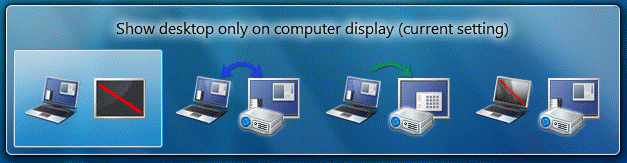
  1. Display Projection. Had enough of messing around with weird and wonderful OEM display driver utilities to get your notebook display onto an external projector? In that case, you’ll be pleased to know that projection is really quick and simple with Windows 7. Just hit Win+P, and you’ll be rewarded by the following pop-up window:

    Use the arrow keys (or keep hitting Win+P) to switch to “clone”, “extend” or “external only” display settings. You can also access the application as displayswitch.exe.
    If you want broader control over presentation settings, you can also press Win+X to open the Windows Mobility Center, which allows you to turn on a presentation “mode” that switches IM clients to do not disturb, disables screensavers, sets a neutral wallpaper etc. (Note that this feature is also available in Windows Vista.)
  2. Cut Out The Clutter. Working on a document in a window and want to get rid of all the extraneous background noise? Simply hit Win+Home to minimize all the non-active background windows, keeping the window you’re using in its current position. When you’re ready, simply press Win+Home again to restore the background windows to their original locations.
  3. Multi-Monitor Windows Management. The earlier tip on window management showed how you can dock windows within a monitor. One refinement of those shortcuts is that you can use Win+Shift+Left Arrow and Win+Shift+Right Arrow to move windows from one monitor to another – keeping them in the same relative location to the monitor’s top-left origin.
  4. Command Junkies Only. One of the most popular power toys in Windows XP was “Open Command Prompt Here”, which enabled you to use the graphical shell to browse around the file system and then use the context menu to open a command prompt at the current working directory. In Windows 7 (and in Windows Vista, incidentally – although not many folk knew about it), you can simply hold the Shift key down while selecting the context menu to get exactly the same effect. If the current working directory is a network location, it will automatically map a drive letter for you.
  5. It’s a Global Village. If you’ve tried to change your desktop wallpaper, you’ve probably noticed that there’s a set of wallpapers there that match the locale you selected when you installed Windows. (If you picked US, you’ll see beautiful views of Crater Lake in Oregon, the Arches National Park, a beach in Hawai’i, etc.) In fact, there are several sets of themed wallpapers installed based on the language you choose, but the others are in a hidden directory. If you’re feeling in an international mood, simply browse to C:\Windows\Globalization\MCT and you’ll see a series of pictures under the Wallpaper directory for each country. Just double-click on the theme file in the Theme directory to display a rotation through all the pictures for that country. (Note that some countries contain a generic set of placeholder art for now.)
  6. The Black Box Recorder. Every developer wishes there was a way that an end-users could quickly and simply record a repro for the problem that they’re running into that is unique to their machine. Windows 7 comes to the rescue! Part of the in-built diagnostic tools that we use internally to send feedback on the product, the Problem Steps Recorder provides a simple screen capture tool that enables you to record a series of actions. Once you hit “record”, it tracks your mouse and keyboard and captures screenshots with any comments you choose to associate alongside them. Once you stop recording, it saves the whole thing to a ZIP file, containing an HTML-based “slide show” of the steps. It’s a really neat little tool and I can’t wait for it to become ubiquitous on every desktop! The program is called psr.exe; you can also search for it from Control Panel under “Record steps to reproduce a problem”.
  7. The Font of All Knowledge. Long Zheng will be happy: we’ve got rid of the Add Fonts dialog that has served Windows faithfully for the last twenty years. (Of course, for most of that time, it’s been deprecated – the easy way to install a set of fonts has simply been to drag them into the Fonts folder via Control Panel.) But now font installation is really easy – we’ve added an “Install” button to the font viewer applet that takes care of the installation process:

    There are lots of other new features built into Windows 7 that will satisfy those of a typographic bent, incidentally – grouping multiple weights together, the ability to hide fonts based on regional settings, a new text rendering engine built into the DirectWrite API, and support in the Font common file dialog for more than the four “standard” weights. For example:
  8. Gabriola. As well as the other typographic features mentioned above, Windows 7 includes Gabriola, an elaborate display type from the Tiro Typeworks foundry that takes advantage of OpenType Layout to provide a variety of stylistic sets, flourishes and ornamentation ligatures:
  9. Who Stole My Browser? If you feel like Internet Explorer is taking a long time to load your page, it’s worth taking a look at the add-ons you have installed. One of the more helpful little additions in Internet Explorer 8 is instrumentation for add-on initialization, allowing you to quickly see whether you’re sitting around waiting for plug-ins to load. Just click Tools / Manage Add-ons, and then scroll right in the list view to see the load time. On my machine, I noticed that the Research add-on that Office 2007 installs was a particular culprit, and since I never use it, it was simple to disable it from the same dialog box.
  10. Rearranging the Furniture. Unless you’ve seen it demonstrated, you may not know that the icons in the new taskbar aren’t fixed in-place. You can reorder them to suit your needs, whether they’re pinned shortcuts or running applications. What’s particularly nice is that once they’re reordered, you can start a new instance of any of the first five icons by pressing Win+1, Win+2, Win+3 etc. I love that I can quickly fire up a Notepad2 instance on my machine with a simple Win+5 keystroke, for instance.
    What’s less well-known is that you can similarly drag the system tray icons around to rearrange their order, or move them in and out of the hidden icon list. It’s an easy way to customize your system to show the things you want, where you want them.
  11. Installing from a USB Memory Stick. My wife has a Samsung NC10 netbook (very nice machine, by the way), and we wanted to install Windows 7 Beta on this machine to replace the pre-installed Windows XP environment. Like most netbook-class devices, this machine has no built-in media drive, and nor did I have an external USB DVD drive available to boot off. The solution: I took a spare 4GB USB 2.0 thumbdrive, reformatted it as FAT32, and simply copied the contents of the Windows 7 Beta ISO image to the memory stick using xcopy e:\ f:\ /e /f (where e: was the DVD drive and f: was the removable drive location). Not only was it easy to boot and install from the thumbdrive, it was also blindingly fast: quicker than the corresponding DVD install on my desktop machine.
    It’s also worth noting in passing that Windows 7 is far better suited to a netbook than any previous operating system: it has a much lighter hard drive and memory footprint than Windows Vista, while also being able to optimize for solid state drives (for example, it switches off disk defragmentation since random read access is as fast as sequential read access, and it handles file deletions differently to minimize wear on the solid state drive).
  12. I Want My Quick Launch Toolbar Back! You might have noticed that the old faithful Quick Launch toolbar is not only disabled by default in Windows 7, it’s actually missing from the list of toolbars. As is probably obvious, the concept of having a set of pinned shortcut icons is now integrated directly into the new taskbar. Based on early user interface testing, we think that the vast majority of users out there (i.e. not the kind of folk who read this blog, with the exception of my mother) will be quite happy with the new model, but if you’re after the retro behavior, you’ll be pleased to know that the old shortcuts are all still there. To re-enable it, do the following:
    • Right-click the taskbar, choose Toolbars / New Toolbar
    • In the folder selection dialog, enter the following string and hit OK:
      %userprofile%\AppData\Roaming\Microsoft\Internet Explorer\Quick Launch
    • Turn off the “lock the taskbar” setting, and right-click on the divider. Make sure that “Show text” and “Show title” are disabled and the view is set to “small icons”.
    • Use the dividers to rearrange the toolbar ordering to choice, and then lock the taskbar again.

If it’s not obvious by the semi-tortuous steps above, it’s worth noting that this isn’t something we’re exactly desperate for folks to re-enable, but it’s there if you really need it for some reason. Incidentally, we’d love you to really try the new model first and give us feedback on why you felt the new taskbar didn’t suit your needs.

  1. It’s a Drag. Much play has been made of the Jump Lists feature in Windows 7, allowing applications like Windows Live Messenger to offer an easy task-based entry point. Jump lists replace the default right-click context menu in the new taskbar; another way to access them (particularly useful if you’re running Windows 7 on a one-button MacBook) is by left-clicking and dragging up in a kind of “swooshing” motion. This was designed for touch-enabled devices like the beautiful HP TouchSmart all-in-one PC, where the same gesture applies.
    Another place where you can “swoosh” (not an official Microsoft term) is the IE 8 address bar, where the downward drag gesture brings up an expanded list containing the browser history, favorites and similar entries. The slower you drag, the cooler the animation!
  2. Standards Support. Every review of Windows 7 that I’ve seen has noted the revamped WordPad and Paint applets that add an Office-like ribbon to expose their functionality. Few, however, have noticed one small but hopefully appreciated feature: WordPad can now read and write both the Word 2007-compatible Office Open XML file format but also the OpenDocument specification that IBM and Sun have been advocating:
  3. Windows Vista-Style Taskbar. I wasn’t initially a fan of the Windows 7 taskbar when it was first introduced in early Windows 7 builds, but as the design was refined in the run up to the beta, I was converted and now actively prefer the new look, particularly when I’ve got lots of windows open simultaneously. For those who really would prefer a look more reminiscent of Windows Vista, the good news is that it’s easy to customize the look of the taskbar to more closely mirror the old version:

    To achieve this look, right-click on the taskbar and choose the properties dialog. Select the “small icons” checkbox and under the “taskbar buttons” setting, choose “combine when taskbar is full”. It’s not pixel-perfect in accuracy, but it’s close from a functionality point of view.
  4. Peeking at the Desktop. While we’re on the taskbar, it’s worth noting a few subtleties. You’ve probably seen the small rectangle in the bottom right hand corner: this is the feature we call “Aero Peek”, which enables you to see any gadgets or icons you’ve got on your desktop. I wanted to note that there’s a keyboard shortcut that does the same thing – just press Win+Space.
  5. Running with Elevated Rights. Want to quickly launch a taskbar-docked application as an administrator? It’s easy – hold down Ctrl+Shift while you click on the icon, and you’ll immediately launch it with full administrative rights (assuming your account has the necessary permissions, of course!)
  6. One More of the Same, Please. I’ve seen a few folk caught out by this one. If you’ve already got an application open on your desktop (for example, a command prompt window), and you want to open a second instance of the same application, you don’t have to go back to the start menu. You can simply hold down the Shift key while clicking on the taskbar icon, and it will open a new instance of the application rather than switching to the existing application. For a keyboard-free shortcut, you canmiddle-click with the third mouse button to do the same thing. (This trick assumes that your application supports multiple running instances, naturally.)
  7. Specialized Windows Switching. Another feature that power users will love is the ability to do a kind of “Alt+Tab” switching across windows that belong to just one application. For example, if you’ve got five Outlook message windows open along with ten other windows, you can quickly tab through just the Outlook windows by holding down the Ctrl key while you repeatedly click on the single Outlook icon. This will toggle through each of the five Outlook windows in order, and is way faster than opening Alt+Tab and trying to figure out which of the tiny thumbnail images relates to the specific message you’re trying to find.
  8. Walking Through the Taskbar. Another “secret” Windows shortcut: press Win+T to move the focus to the taskbar. Once you’re there, you can use the arrow keys to select a particular window or group and then hit Enter to launch or activate it. As ever, you can cancel out of this mode by hitting the Esc key. I don’t know for sure, but I presume this shortcut was introduced for those with accessibility needs. However, it’s equally valuable to power users – another good reason for all developers to care about ensuring their code is accessible.
  9. The Widescreen Tip. Almost every display sold these days is widescreen, whether you’re buying a notebook computer or a monitor. While it might be great for watching DVDs, when you’re trying to get work done it can sometimes feel like you’re a little squeezed for vertical space.
    As a result, the first thing I do when I set up any new computer is to dock the taskbar to the left hand side of the screen. I can understand why we don’t set this by default – can you imagine the complaints from enterprise IT departments who have to retrain all their staff – but there’s no reason why you as a power user should have to suffer from default settings introduced when the average screen resolution was 800×600.
    In the past, Windows did an indifferent job of supporting “side dockers” like myself. Sure, you could move the taskbar, but it felt like an afterthought – the gradients would be wrong, the Start menu had a few idiosyncrasies, and you’d feel like something of a second-class citizen. The Windows 7 taskbar feels almost as if it was designed with vertical mode as the default – the icons work well on the side of the screen, shortcuts like the Win+T trick mentioned previously automatically switch from left/right arrows to up/down arrows, and so on. The net effect is that you wind up with a much better proportioned working space.
    Try it – in particular, if you’ve got a netbook computer that has a 1024×600 display, you’ll immediately appreciate the extra space for browsing the Internet. For the first day you’ll feel a little out of sync, but then I guarantee you’ll become an enthusiastic convert!
  10. Pin Your Favorite Folders. If you’re always working in the same four or five folders, you can quickly pin them with the Explorer icon on the taskbar. Hold the right-click button down and drag the folder to the taskbar, and it will be automatically pinned in the Explorer Jump List.
  11. Starting Explorer from “My Computer”. If you spend more time manipulating files outside of the documents folders than inside, you might want to change the default starting directory for Windows Explorer so that it opens at the Computer node:

    To do this, navigate to Windows Explorer in the Start Menu (it’s in the Accessories folder). Then edit the properties and change the target to read:
    %SystemRoot%\explorer.exe /root,::{20D04FE0-3AEA-1069-A2D8-08002B30309D}

    If you want the change to affect the icon on the taskbar, you’ll need to unpin and repin it to the taskbar so that the new shortcut takes affect. It’s worth noting that Win+E will continue to display the documents library as the default view: I’ve not found a way to change this from the shell at this time.
  12. ClearType Text Tuning and Display Color Calibration. If you want to tune up your display for image or text display, we have the tools included out of the box. It’s amazing what a difference this makes: by slightly darkening the color of the text and adjusting the gamma back a little, my laptop display looks much crisper than it did before. You’d adjust the brightness and contrast settings on that fancy 42” HDTV you’ve just bought: why wouldn’t you do the same for the computer displays that you stare at every day?

    Check out cttune.exe and dccw.exe respectively, or run the applets from Control Panel.
  13. ISO Burning. Easy to miss if you’re not looking for it: you can double-click on any DVD or CD .ISO image and you’ll see a helpful little applet that will enable you to burn the image to a blank disc. No more grappling for shareware utilities of questionable parentage!
  14. Windows Movie Maker. Windows 7 doesn’t include a movie editing tool – it’s been moved to the Windows Live Essentials package, along with Photo Gallery, Mail and Messenger. Unfortunately, Windows Live Movie Maker is currently still in an early beta that is missing most of the old feature set (we’re reworking the application), and so you might be feeling a little bereft of options. It goes without saying that we intend to have a better solution by the time we ship Windows 7, but in the meantime the best solution for us early adopters is to use Windows Movie Maker 2.6 (which is essentially the same as the most recent update to the Windows XP version). It’s missing the full set of effects and transitions from the Windows Vista version, and doesn’t support HD editing, but it’s pretty functional for the typical usage scenario of home movie editing.

    Download Windows Movie Maker 2.6 from here:
    http://microsoft.com/downloads/details.aspx?FamilyID=d6ba5972-328e-4df7-8f9d-068fc0f80cfc
  15. Hiding the Windows Live Messenger Icon. Hopefully your first act after Windows 7 setup completed was to download and install the Windows Live Essentials suite of applications (if not, then you’re missing out on a significant part of the Windows experience). If you’re a heavy user of IM, you may love the way that Windows Live Messenger is front and central on the taskbar, where you can easily change status and quickly send an IM to someone:

    On the other hand, you may prefer to keep Windows Live Messenger in the system tray where it’s been for previous releases. If so, you can fool the application into the old style of behavior. To do this, close Windows Live Messenger, edit the shortcut properties and set the application to run in Windows Vista compatibility mode. Bingo!
  16. Enjoy The Fish. I’m surprised that not many people seem to have caught the subtle joke with the Siamese fighting fish that is part of the default background, so I’ll do my part at keeping the secret hidden. Check out wikipedia for a clue.
  17. When All Else Fails… There are always those times when you’re in a really bad spot – you can’t boot up properly, and what you really want is something you can quickly use to get at a command prompt so you can properly troubleshoot. Windows 7 now includes the ability to create a system repair disc, which is essentially a CD-bootable version of Windows that just includes the command prompt and a suite of system tools. Just type “system repair disc” in the Start Menu search box, and you’ll be led to the utility.

Posted in Techie Hobbies, Uncategorized | Leave a comment

Robert Fisk: Why do they hate the West so much, we will ask


Wednesday, 7 January 2009

AP

A child injured in the Israeli bombardment of a UN school yesterday is taken to Shifa hospital in Gaza City

Related Articles

So once again, Israel has opened the gates of hell to the Palestinians. Forty civilian refugees dead in a United Nations school, three more in another. Not bad for a night’s work in Gaza by the army that believes in "purity of arms". But why should we be surprised?

Have we forgotten the 17,500 dead – almost all civilians, most of them children and women – in Israel’s 1982 invasion of Lebanon; the 1,700 Palestinian civilian dead in the Sabra-Chatila massacre; the 1996 Qana massacre of 106 Lebanese civilian refugees, more than half of them children, at a UN base; the massacre of the Marwahin refugees who were ordered from their homes by the Israelis in 2006 then slaughtered by an Israeli helicopter crew; the 1,000 dead of that same 2006 bombardment and Lebanese invasion, almost all of them civilians?

What is amazing is that so many Western leaders, so many presidents and prime ministers and, I fear, so many editors and journalists, bought the old lie; that Israelis take such great care to avoid civilian casualties. "Israel makes every possible effort to avoid civilian casualties," yet another Israeli ambassador said only hours before the Gaza massacre. And every president and prime minister who repeated this mendacity as an excuse to avoid a ceasefire has the blood of last night’s butchery on their hands. Had George Bush had the courage to demand an immediate ceasefire 48 hours earlier, those 40 civilians, the old and the women and children, would be alive.

What happened was not just shameful. It was a disgrace. Would war crime be too strong a description? For that is what we would call this atrocity if it had been committed by Hamas. So a war crime, I’m afraid, it was. After covering so many mass murders by the armies of the Middle East – by Syrian troops, by Iraqi troops, by Iranian troops, by Israeli troops – I suppose cynicism should be my reaction. But Israel claims it is fighting our war against "international terror". The Israelis claim they are fighting in Gaza for us, for our Western ideals, for our security, for our safety, by our standards. And so we are also complicit in the savagery now being visited upon Gaza.

I’ve reported the excuses the Israeli army has served up in the past for these outrages. Since they may well be reheated in the coming hours, here are some of them: that the Palestinians killed their own refugees, that the Palestinians dug up bodies from cemeteries and planted them in the ruins, that ultimately the Palestinians are to blame because they supported an armed faction, or because armed Palestinians deliberately used the innocent refugees as cover.

The Sabra and Chatila massacre was committed by Israel’s right-wing Lebanese Phalangist allies while Israeli troops, as Israel’s own commission of inquiry revealed, watched for 48 hours and did nothing. When Israel was blamed, Menachem Begin’s government accused the world of a blood libel. After Israeli artillery had fired shells into the UN base at Qana in 1996, the Israelis claimed that Hizbollah gunmen were also sheltering in the base. It was a lie. The more than 1,000 dead of 2006 – a war started when Hizbollah captured two Israeli soldiers on the border – were simply dismissed as the responsibility of the Hizbollah. Israel claimed the bodies of children killed in a second Qana massacre may have been taken from a graveyard. It was another lie. The Marwahin massacre was never excused. The people of the village were ordered to flee, obeyed Israeli orders and were then attacked by an Israeli gunship. The refugees took their children and stood them around the truck in which they were travelling so that Israeli pilots would see they were innocents. Then the Israeli helicopter mowed them down at close range. Only two survived, by playing dead. Israel didn’t even apologise.

Twelve years earlier, another Israeli helicopter attacked an ambulance carrying civilians from a neighbouring village – again after they were ordered to leave by Israel – and killed three children and two women. The Israelis claimed that a Hizbollah fighter was in the ambulance. It was untrue. I covered all these atrocities, I investigated them all, talked to the survivors. So did a number of my colleagues. Our fate, of course, was that most slanderous of libels: we were accused of being anti-Semitic.

And I write the following without the slightest doubt: we’ll hear all these scandalous fabrications again. We’ll have the Hamas-to-blame lie – heaven knows, there is enough to blame them for without adding this crime – and we may well have the bodies-from-the-cemetery lie and we’ll almost certainly have the Hamas-was-in-the-UN-school lie and we will very definitely have the anti-Semitism lie. And our leaders will huff and puff and remind the world that Hamas originally broke the ceasefire. It didn’t. Israel broke it, first on 4 November when its bombardment killed six Palestinians in Gaza and again on 17 November when another bombardment killed four more Palestinians.

Yes, Israelis deserve security. Twenty Israelis dead in 10 years around Gaza is a grim figure indeed. But 600 Palestinians dead in just over a week, thousands over the years since 1948 – when the Israeli massacre at Deir Yassin helped to kick-start the flight of Palestinians from that part of Palestine that was to become Israel – is on a quite different scale. This recalls not a normal Middle East bloodletting but an atrocity on the level of the Balkan wars of the 1990s. And of course, when an Arab bestirs himself with unrestrained fury and takes out his incendiary, blind anger on the West, we will say it has nothing to do with us. Why do they hate us, we will ask? But let us not say we do not know the answer.

Posted in Uncategorized | Leave a comment

Robert Fisk: The self delusion that plagues both sides in this bloody conflict


Israel has never won a war in a built-up city, that’s why threats of ‘war to the bitter end’ are nonsense

Wednesday, 31 December 2008

During the second Palestinian "intifada", I was sitting in the offices of Hizbollah’s Al-Manar television station in Beirut, watching news footage of a militiaman’s funeral in Gaza. The television showed hordes of Hamas and PLO gunmen firing thousands of rounds of ammunition into the air to honour their latest "martyr"; and I noticed, just next to me, a Lebanese Hizbollah member – who had taken part in many attacks against the Israelis in what had been Israel’s occupation zone in southern Lebanon – shaking his head.

What was he thinking, I asked? "Hamas try to stand up to the Israelis," he replied. "But…" And here he cast his eyes to the ceiling. "They waste bullets. They fire all these bullets into the sky. They should use them to shoot at Israelis."

His point, of course, was that Hamas lacked discipline, the kind of iron, ruthless discipline and security that Hizbollah forged in Lebanon and which the Israeli army was at last forced to acknowledge in southern Lebanon in 2006. Guns are weapons, not playthings for funerals. And Gaza is not southern Lebanon. It would be as well for both sides in this latest bloodbath in Gaza to remember this. Hamas is not Hizbollah. Jerusalem is not Beirut. And Israeli soldiers cannot take revenge for their 2006 defeat in Lebanon by attacking Hamas in Gaza – not even to help Ms Livni in the Israeli elections.

Not that Hizbollah won the "divine victory" it claimed two years ago. Driving the roads of southern Lebanon as the Israelis smashed the country’s infrastructure, killed more than a thousand Lebanese – almost all of them civilians – and razed dozens of villages, it didn’t feel like a Hizbollah "victory" to me, theological or otherwise. But the Israelis didn’t win and the Hizbollah were able to deploy thousands of long-range rockets as well as a missile which set an Israeli warship on fire and almost sank it. Hamas have nothing to match that kind of armoury.

Nor do they have the self-discipline to fight like an army. Hizbollah in Lebanon has managed to purge its region of informers. Hamas – like all the other Palestinian outfits – is infected with spies, some working for the Palestinian Authority, others for the Israelis. Israel has successively murdered one Hamas leader after another – "targeted killing", of course, is their polite phrase – and they couldn’t do that without, as the police would say, "inside help". Hizbollah’s previous secretary general, Sayed Abbas Moussawi, was assassinated near Jibchit by a missile-firing Israeli helicopter more than a decade ago but the movement hasn’t suffered a leader’s murder in Lebanon since then. In the 34-day war of 2006, Hizbollah lost about 200 of its men. Hamas lost almost that many in the first day of Israel’s air attacks in Gaza – which doesn’t say much for Hamas’ military precautions.

Israel, however – always swift to announce its imminent destruction of "terrorism" – has never won a war in a built-up city, be it Beirut or Gaza, since its capture of Jerusalem in 1967. And it’s important to remember that the Israeli army, famous in song and legend for its supposed "purity of arms" and "elite" units, has proved itself to be a pretty third-rate army over recent years. Not since the 1973 Middle East conflict – 35 years ago – has it won a war. Its 1978 invasion of Lebanon was a failure, its 1982 invasion ended in disaster, propelling Arafat from Beirut but allowing its vicious Phalangist allies into the Sabra and Chatila camps where they committed mass murder. In neither the 1993 bombardment of Lebanon nor the 1996 bombardment of Lebanon – which fizzled out after the massacre of refugees at Qana – nor the 2006 war was its performance anything more than amateur. Indeed, if it wasn’t for the fact Arab armies are even more of a rabble than the Israelis, the Israeli state would be genuinely under threat from its neighbours.

One common feature of Middle East wars is the ability of all the antagonists to suffer from massive self-delusion. Israel’s promise to "root out terror" – be it of the PLO, Hizbollah, Hamas, Islamic Jihad, Iranian or any other kind – has always turned out to be false. "War to the bitter end," the Israeli defence minister, Ehud Barak, has promised in Gaza. Nonsense. Just like the PLO’s boast – and Hamas’ boast and Hizbollah’s boast – to "liberate" Jerusalem. Eyewash. But the Israelis have usually shown a dangerous propensity to believe their own propaganda. Calling up more than 6,000 reservists and sitting them round the Gaza fence is one thing; sending them into the hovels of Gaza will be quite another. In 2006, Israel claimed it was sending 30,000 troops into Lebanon. In reality, it sent about 3,000 – and the moment they crossed the border, they were faced down by the Hizbollah. In some cases, Israeli soldiers actually ran back to their own frontier.

These are realities. The chances of war, however, may be less easier to calculate. If Israel indefinitely continues its billion dollar blitz on Gaza – and we all know who is paying for that – there will, at some stage, be an individual massacre; a school will be hit, a hospital or a pre-natal clinic or just an apartment packed with civilians. In other words, another Qana. At which point, a familiar story will be told; that Hamas destroyed the school/hospital/pre-natal clinic, that the journalists who report on the slaughter are anti-Semitic, that Israel is under threat, etc. We may even get the same disingenuous parallel with a disastrous RAF raid in the Second World War which both Menachem Begin and Benjamin Netanayahu have used over the past quarter century to justify the killing of civilians.

And Hamas – which never had the courage to admit it killed two Palestinian girls with one of its own rockets last week – will cynically make profit from the grief with announcements of war crimes and "genocide".

At which point, the deeply despised and lame old UN donkey will be clip-clopped onto the scene to rescue the Israeli army and Hamas from this disgusting little war. Of course, saner minds may call all this off before the inevitable disaster. But I doubt it.

Posted in Uncategorized | Leave a comment

Robert Fisk: Why bombing Ashkelon is the most tragic irony

Robert Fisk: Why bombing Ashkelon is the most tragic irony

Tuesday, 30 December 2008

How easy it is to snap off the history of the Palestinians, to delete the narrative of their tragedy, to avoid a grotesque irony about Gaza which – in any other conflict – journalists would be writing about in their first reports: that the original, legal owners of the Israeli land on which Hamas rockets are detonating live in Gaza.

That is why Gaza exists: because the Palestinians who lived in Ashkelon and the fields around it – Askalaan in Arabic – were dispossessed from their lands in 1948 when Israel was created and ended up on the beaches of Gaza. They – or their children and grandchildren and great-grandchildren – are among the one and a half million Palestinian refugees crammed into the cesspool of Gaza, 80 per cent of whose families once lived in what is now Israel. This, historically, is the real story: most of the people of Gaza don’t come from Gaza.

But watching the news shows, you’d think that history began yesterday, that a bunch of bearded anti-Semitic Islamist lunatics suddenly popped up in the slums of Gaza – a rubbish dump of destitute people of no origin – and began firing missiles into peace-loving, democratic Israel, only to meet with the righteous vengeance of the Israeli air force. The fact that the five sisters killed in Jabalya camp had grandparents who came from the very land whose more recent owners have now bombed them to death simply does not appear in the story.

Both Yitzhak Rabin and Shimon Peres said back in the 1990s that they wished Gaza would just go away, drop into the sea, and you can see why. The existence of Gaza is a permanent reminder of those hundreds of thousands of Palestinians who lost their homes to Israel, who fled or were driven out through fear or Israeli ethnic cleansing 60 years ago, when tidal waves of refugees had washed over Europe in the aftermath of the Second World War and when a bunch of Arabs kicked out of their property didn’t worry the world.

Well, the world should worry now. Crammed into the most overpopulated few square miles in the whole world are a dispossessed people who have been living in refuse and sewage and, for the past six months, in hunger and darkness, and who have been sanctioned by us, the West. Gaza was always an insurrectionary place. It took two years for Ariel Sharon’s bloody "pacification", starting in 1971, to be completed, and Gaza is not going to be tamed now.

Alas for the Palestinians, their most powerful political voice – I’m talking about the late Edward Said, not the corrupt Yassir Arafat (and how the Israelis must miss him now) – is silent and their predicament largely unexplained by their deplorable, foolish spokesmen. "It’s the most terrifying place I’ve ever been in," Said once said of Gaza. "It’s a horrifyingly sad place because of the desperation and misery of the way people live. I was unprepared for camps that are much worse than anything I saw in South Africa."

Of course, it was left to Israeli Foreign Minister Tzipi Livni to admit that "sometimes also civilians pay the price," an argument she would not make, of course, if the fatality statistics were reversed. Indeed, it was instructive yesterday to hear a member of the American Enterprise Institute – faithfully parroting Israel’s arguments – defending the outrageous Palestinian death toll by saying that it was "pointless to play the numbers game". Yet if more than 300 Israelis had been killed – against two dead Palestinians – be sure that the "numbers game" and the disproportionate violence would be all too relevant. The simple fact is that Palestinian deaths matter far less than Israeli deaths. True, we know that 180 of the dead were Hamas members. But what of the rest? If the UN’s conservative figure of 57 civilian fatalities is correct, the death toll is still a disgrace.

To find both the US and Britain failing to condemn the Israeli onslaught while blaming Hamas is not surprising. US Middle East policy and Israeli policy are now indistinguishable and Gordon Brown is following the same dog-like devotion to the Bush administration as his predecessor.

As usual, the Arab satraps – largely paid and armed by the West – are silent, preposterously calling for an Arab summit on the crisis which will (if it even takes place), appoint an "action committee" to draw up a report which will never be written. For that is the way with the Arab world and its corrupt rulers. As for Hamas, they will, of course, enjoy the discomfiture of the Arab potentates while cynically waiting for Israel to talk to them. Which they will. Indeed, within a few months, we’ll be hearing that Israel and Hamas have been having "secret talks" – just as we once did about Israel and the even more corrupt PLO. But by then, the dead will be long buried and we will be facing the next crisis since the last crisis.

Posted in Uncategorized | Leave a comment

Top 10 little-known Gmail features (Part 1)

Top 10 little-known Gmail features (Part 1)

Friday, August 31, 2007 3:08 PM

Posted by Bill Kee, Associate Product Marketing Manager

Gmail has a bunch of lesser-known feature that can end up being very useful once you get to know them. I’ve put together a list of my top 10 favorite features that you may or may not be familiar with. Here are the first five; watch for the second batch sometime next week.

10. Custom "from"
Most people end up managing more than one email account — some are personal, others might be for work or school. When I graduated from college, I wanted to keep my .edu address for alumni-related things, but made Gmail my primary personal address. My university made it easy to forward my .edu mail to my Gmail address, so I could read all my mail from my within my Gmail account. I was happy to find out that Gmail would actually let me send mail "as" my .edu address, so I could continue to keep that identity, while managing all my email from one place. Here’s how to set that up.

9. Open attachments in Google Docs & Spreadsheets, or view as slideshow
If you are sending a Word document or Excel file as an attachment, Gmail lets you easily open it in Google Docs & Spreadsheets. (In case you’re not familiar with Google Docs & Spreadsheets, it’s our online word processor and spreadsheet application, which lets you store and access documents online and collaborate on them with anyone.) Since other people are working on many of the docs I receive as attachments collaboratively, it’s really easy to just open them in Docs & Spreadsheets and create a single document to work from, rather than constantly sending versions of documents back and forth. If the attachment is a PowerPoint presentation, Gmail will recognize this and give you a link to"View as a slideshow." This will open a window with a Flash preview of the slides. This is great for quickly reviewing slides in the browser.

8. Gmail gadget for iGoogle
I use iGoogle to bring together a lot of the information I care about on the web (feeds, my Google Calendar, YouTube videos, etc). I use it as a dashboard at the start of my day to get an overview of what’s going on in the world. I’ve added the Gmail gadget to my page to get a preview of my Inbox, which is great because it’s one of the first things I’m interested in seeing.

7. Reply by chat
Most people know that you can chat with your contacts in Gmail if they’re using Gmail too. But there are some subtle features that make chat particularly useful in the context of using your email, like replying by chat. If you’ve received an email and notice that the sender is online (by seeing the little green dot next to his or her name in the conversation), you can click the button "reply by chat." What’s particularly convenient about this is that the chat will be archived as part of the email thread to which you replied. I like this most because it means when I search for anything related to that thread, I find the chat transcript alongside all the relevant email messages.


6. Gmail for mobile application
It wasn’t that long ago that my cellphone could barely handle sending text messages. I didn’t used to think of it as being an efficient place to access my email. That’s changed — big time. Email has become one of my primary forms of communication when on the go. Unfortunately, on a lot of phones, dealing with email can still be a pretty annoying experience, especially if you’re not using a device like a PDA. Enter Gmail for mobile. It’s fast, it syncs with your online account, and it gives you virtually all of the same Gmail functionality like search, filters, and access to your whole archive of mail. 
 

Posted in Computers and Internet | Leave a comment